Course Syllabus
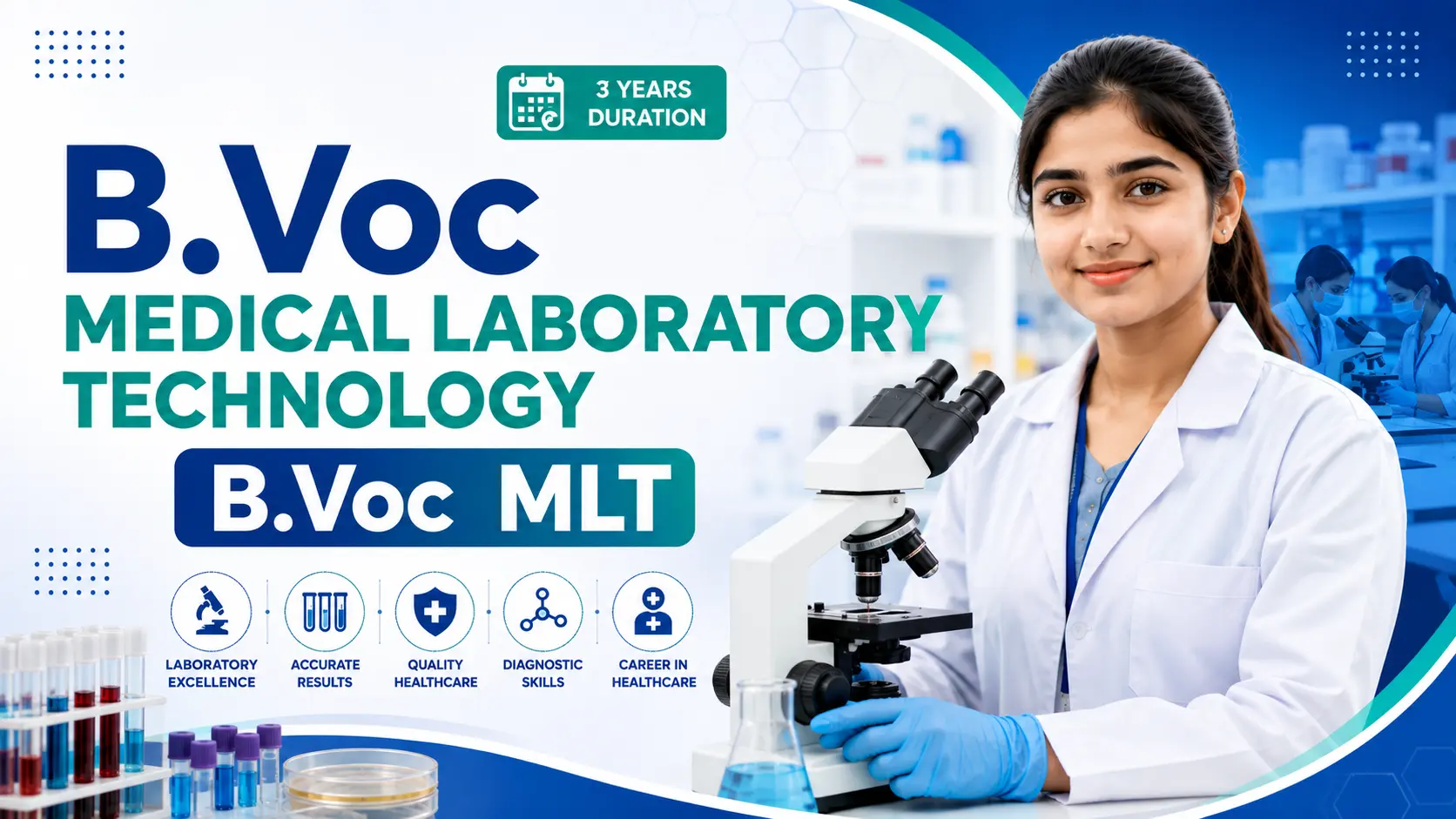
Year 1: Foundations & Core Sciences
Semester I
- Human Anatomy: Study of the skeletal system, muscular framework, organs, and tissue structures.
- Fundamentals of MLT: Introduction to laboratory safety, basic apparatus, liquid handling, and glass-cleaning protocols.
- Basics of Clinical Biochemistry: General overview of chemical methods applied to laboratory medicine.
- English & Communication Skills: Professional reporting, medical terminology, and interpersonal skills.
Semester II
- Human Physiology: In-depth study of how body systems (circulatory, respiratory, excretory) function.
- Basic Pathology: Introduction to disease mechanics, inflammation, and cellular structural changes.
- Microbial Instrumentation: Safe operation of autoclaves, incubators, hot air ovens, and centrifuges.
Fundamental Biochemistry: Core chemical processes in living organisms, covering carbohydrates, lipids, and proteins.
Year 2: Advanced Diagnostics & Clinical Practice
Semester III
- Clinical Hematology: Detailed evaluation of blood cells, red/white blood cell counting, and clotting analysis.
- Blood Banking & Serology: Blood typing, cross-matching techniques, donor screening, and antigen-antibody interactions.
- Metabolic Biochemistry: Assessing metabolic pathways via liver, lipid profile, and renal function tests.
Technical Microbiology: Techniques for isolating and growing bacteria, fungi, and parasites from samples.
Semester IV
- Histopathological Techniques: Microscopic study of tissues, surgical specimen receiving, fixing, embedding, and section staining.
- Clinical Microbiology: Identifying pathogenic microorganisms and running antibiotic sensitivity tracking.
- Clinical Pathology: Routine chemical and microscopic testing of stool, urine, semen, and other biological fluids.
- Laboratory Management & Ethics: Quality control protocols, record keeping, and biomedical waste disposal frameworks.
Core Practical Components
Across both years, students spend a significant amount of time performing hands-on procedures:
- Phlebotomy: Mastering vein puncture and capillary blood collection.
- Staining Procedures: Executing Gram, Leishman, and H&E stains.
- Automated Analyzer Operation: Working with automated hematology and biochemistry analyzers

 Bestseller